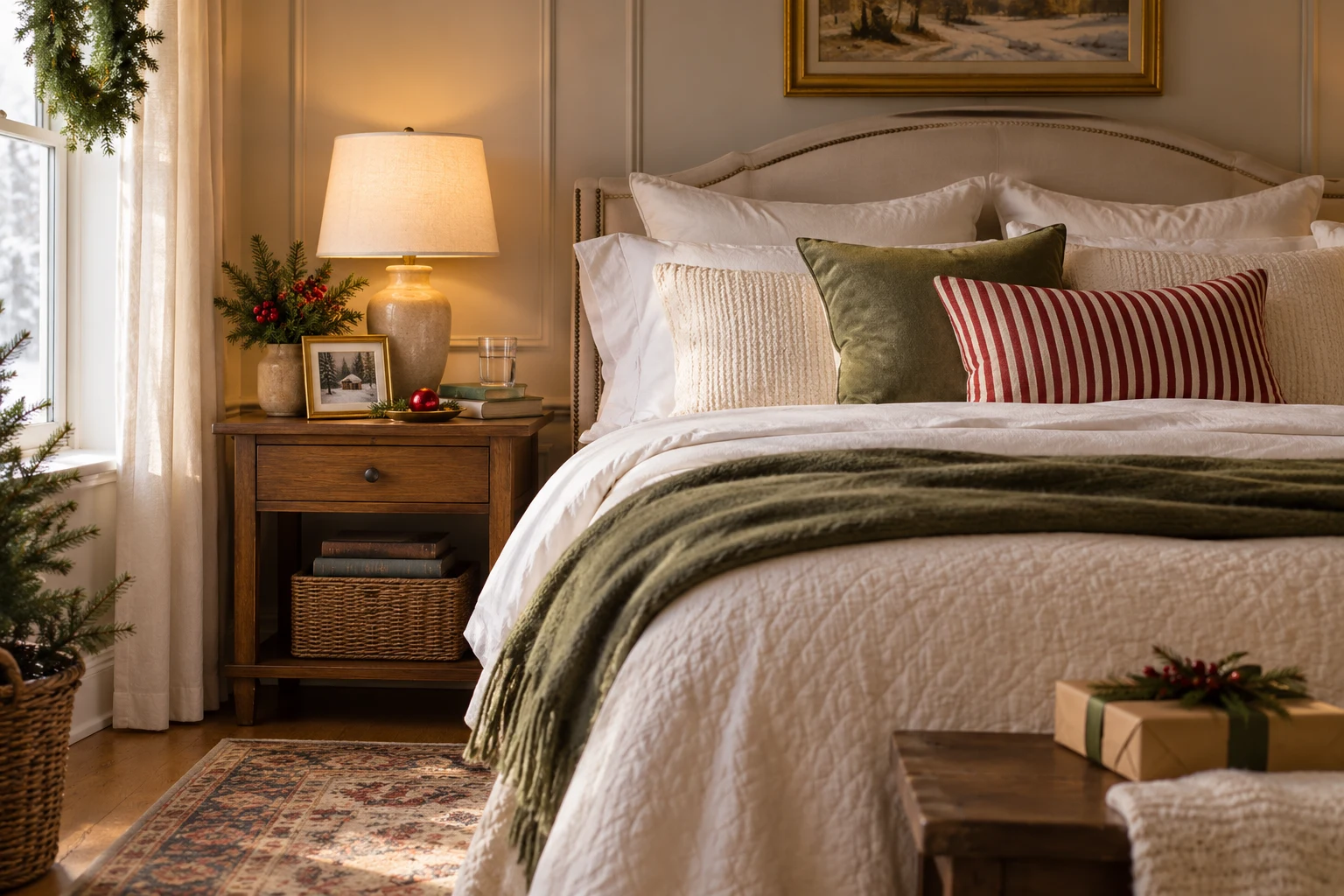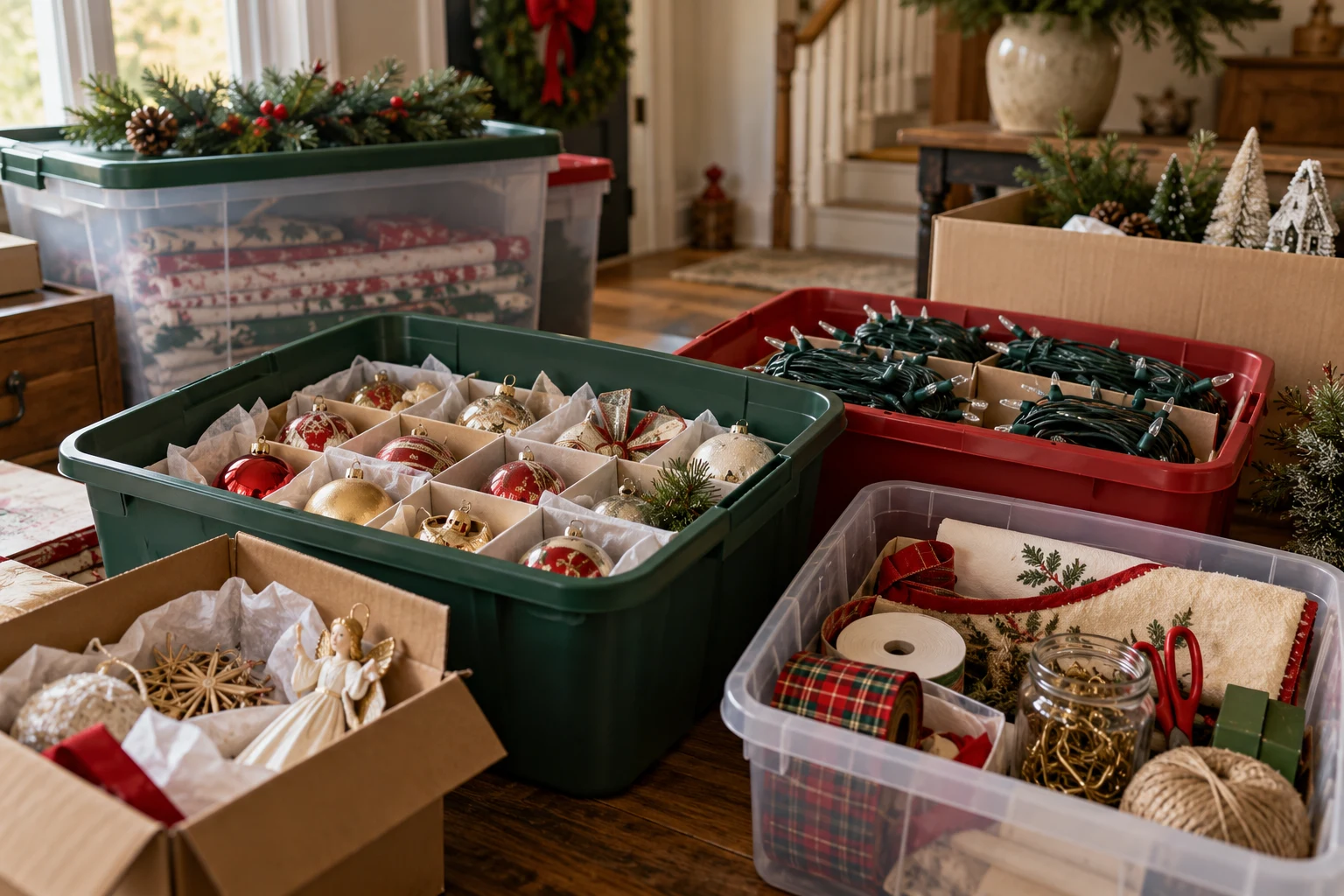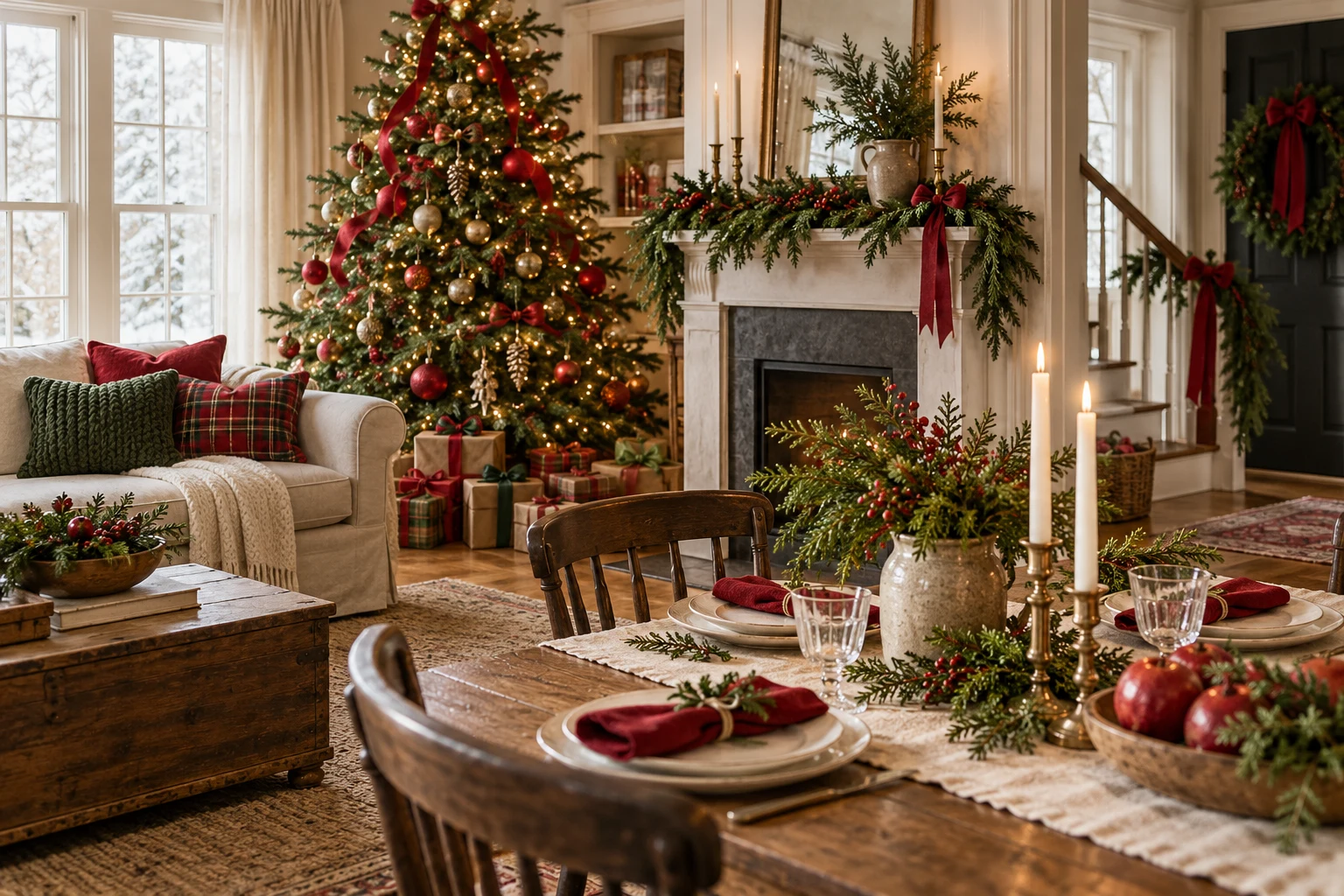
Red and green can feel warm and collected rather than loud. The trick is choosing versions of the colors that work with your home and letting natural textures soften the combination. You do not need an exact match between every ribbon, ornament, and pillow.
Choose your version of red
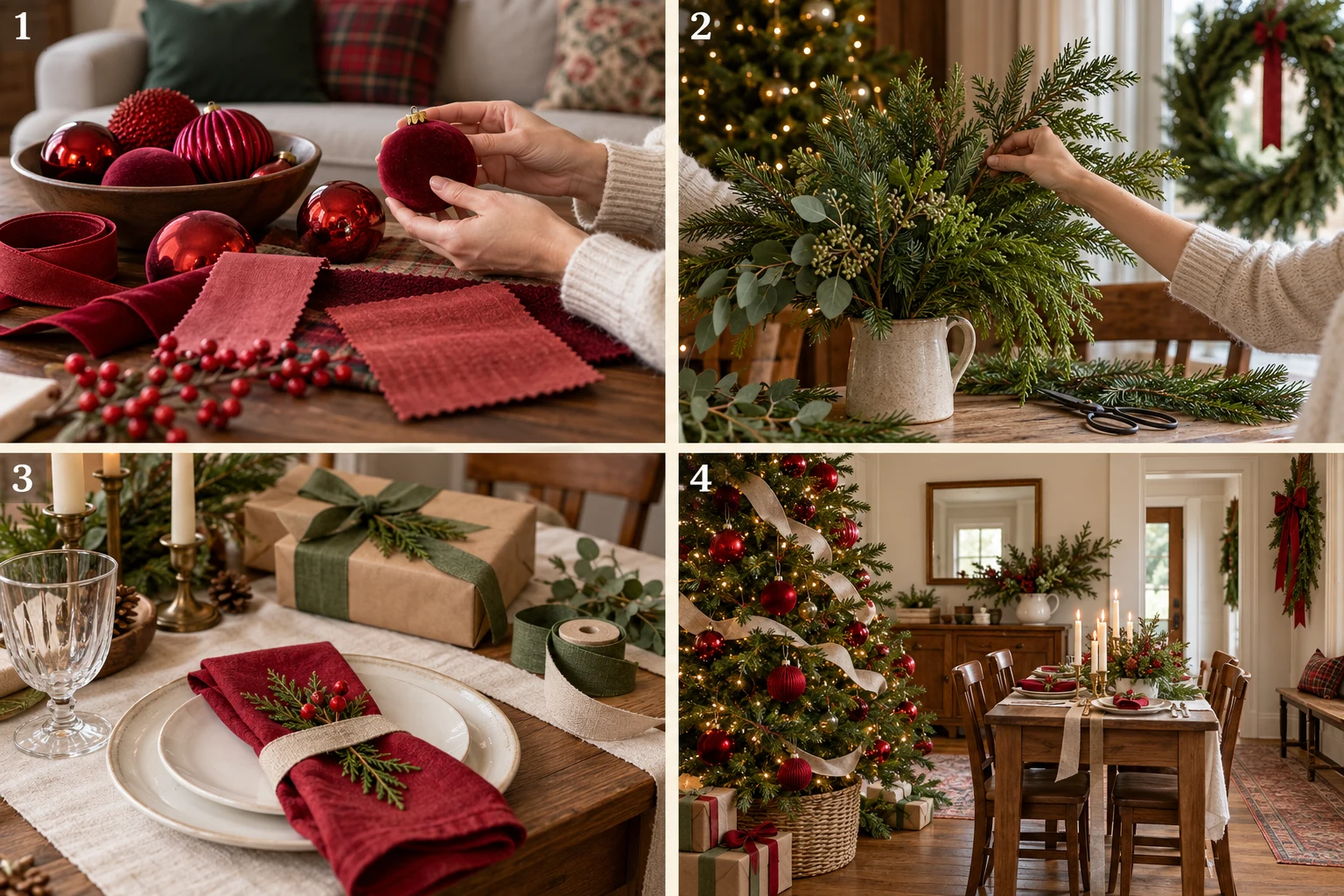
Place a few red objects together in the room where you will use them. Cranberry, cherry, and brick can behave differently beside your sofa or wood furniture. Choose a dominant shade and allow small variations. Avoid buying a full set before checking one piece in your own lighting.
Let greenery supply the green
Use the tree, a wreath, or a simple branch arrangement as the main green element. Add green textiles only where the room needs another connection. Several natural greens can work together because they share an organic texture. Keep fresh or dried materials away from heat and remove them when they deteriorate.
Give the colors a quiet background
Cream fabric, brown paper, wood, and ordinary white dishes help the red and green stand out without crowding one another. Set a red napkin on a plain plate or tie a green ribbon around a kraft-paper gift. Space between accents matters as much as the accents themselves.
Repeat the palette in three places
Choose the tree, the table, and one small entryway detail as your anchors. Carry one material, such as linen ribbon, through all three. Take a photograph of the room and remove any isolated accent that distracts from the arrangement. The result should feel connected, not like every object came from one matching kit.